
There Is No Game: WD
DRAW ME A PIXELPuzzle
4.72.28K Reviews
- Version
- 1.0.40
- Installs
- 500.00K
- Age Rating
- Everyone 10+
Screenshots
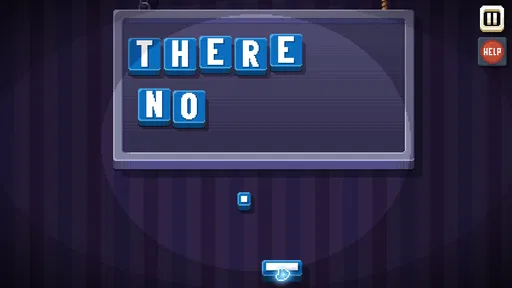
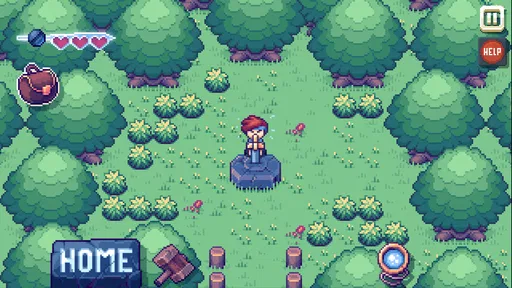
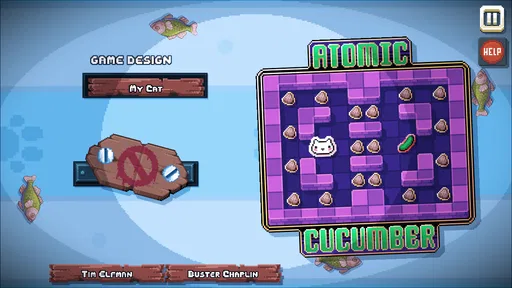
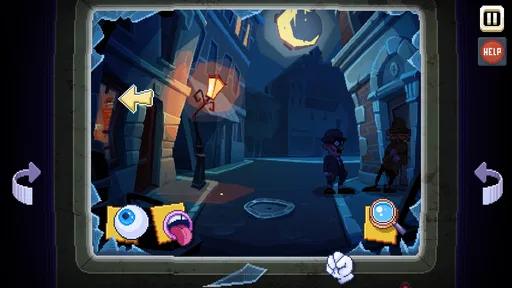
Our Review of There Is No Game: WD
 Analysis by Appyee
I’d choose There Is No Game: WD when I’m in the mood for a puzzle experience that wants me to question the screen rather than simply follow a familiar set of rules. It’s an odd, self-aware game from DRAW ME A PIXEL, built around comedy, curiosity and the pleasure of noticing something that seems out of place. That unusual approach is its main draw, but it also makes this a poor fit for anyone who wants clear instructions, a conventional adventure or puzzles that stay neatly inside the usual boundaries.
In practical terms, I think the key question is whether you enjoy being teased by a game that acts as if you should leave it alone. The premise is part of the joke, and the fun comes from working out when to take that joke seriously and when to challenge it. I found that more satisfying than a standard sequence of riddles, though the same mischievous style may frustrate players who prefer direct goals and steady, plainly signposted progress.
What to expect from its unusual puzzle design
Ever stumble across a game that insists it's not a game? Well, There Is No Game: WD is exactly that kind of peculiar gem. When I first downloaded it, I was curious about what a "non-game" could possibly entail. Let me take you through my quirky journey with this app that defies conventional gaming logic.
That first impression matters because the experience asks for a different kind of attention from a typical puzzle game. Instead of treating every screen as a board with obvious objects to combine, I found myself considering the presentation itself: what the narrator says, what the interface appears to permit, and whether the game is inviting me to ignore its instructions. My most useful approach was to pause when something felt deliberately unhelpful, then test one idea at a time rather than tapping randomly. That small change made exploration feel like reasoning instead of guesswork.
A realistic way to enjoy it is to set aside a quiet stretch of time after work or during a relaxed weekend break. I wouldn’t open it expecting to squeeze in a tidy, self-contained round while distracted by messages. The humor and puzzle logic work best when I remember what has already been suggested and can follow a strange thread for a while. If I do need to stop, returning with a little patience is better than trying to rush through just to see the next scene.
There is also a useful distinction between playful experimentation and indiscriminate clicking. The game encourages curiosity, but trying every possible interaction without thinking can make the comedy feel like noise and leave me less sure about what I learned. I got more from noticing a contradiction, forming a plausible explanation, and then testing it. That habit is especially helpful when a puzzle seems to be about the rules of games themselves rather than a conventional object-and-key solution.
How its story turns curiosity into progress
From the get-go, the game makes it clear that you're not about to experience a typical gaming adventure. The app opens with a minimalist interface and a voiceover that cheekily insists there’s nothing to see here. It's like the developers are in on a joke, and you’ve just been invited to join the punchline.
The game plays with your expectations, using clever humor and witty commentary to engage you. At first, I found myself clicking around aimlessly, but soon, the mysterious allure of figuring out what exactly was happening drew me deeper into its world. It’s a delightful blend of comedy and puzzle-solving that keeps you guessing.
For a puzzle fan, the important trade-off is that narrative and problem-solving are tightly connected. The narrator’s attitude is not just decoration; it helps establish the tone in which I interpret what the screen is doing. I paid attention to changes in what was being said as well as to what I could interact with, because a joke can also be a clue about how the game wants me to think. When a line seems to dismiss an idea, I consider whether the dismissal itself is part of the invitation to investigate.
This makes the game particularly well suited to someone who enjoys comic timing and doesn’t mind a story that withholds certainty. It is less ideal for a player who wants a clear objective displayed at every step, or who tends to skip dialogue to get straight to a puzzle. Here, skipping the tone-setting can make the interaction harder to read: the experience relies on the contrast between what appears to be happening and what the narrator claims is happening.
Why the puzzles reward a change of perspective
One of the standout elements of the game is its narrative style. The voice acting is top-notch, with a narrator whose dry humor and sarcastic remarks had me chuckling throughout. It's like having a conversation with a witty friend who keeps throwing curveballs at you.
The storyline is anything but linear. As you "play" along, you’re often left wondering if you’re making any progress at all. Yet, every click and interaction gradually unravels a deeper story. It's this sense of intrigue and discovery that makes the experience so captivating. You’re not just playing a game; you’re participating in an interactive story where the unexpected is the norm.
Compared with familiar puzzle games, where the challenge is often to identify a pattern, solve a set of clues or manipulate objects according to consistent rules, this one’s pleasure comes from questioning the setup. I wouldn’t recommend applying the same method I’d use for a conventional logic grid or a straightforward escape-room puzzle. Those alternatives are better if I want a clear, contained challenge with a predictable relationship between clue and answer. This game is a stronger choice when I want the act of figuring out what kind of game I’m playing to be part of the puzzle.
When I’m stuck, I try to identify what the game has taught me about the current situation before experimenting again. I ask myself what the narrator wants me to believe, what the interface implies, and whether I have treated an apparent boundary as fixed without testing it. This doesn’t guarantee an instant solution, and sometimes the intended leap can still feel surprising, but it gives each attempt a reason. It also helps me avoid spoiling the discovery by searching for an answer too quickly.
Presentation, sound and the practical trade-offs
Even though it claims not to be a game, puzzles are at the heart of it. The challenges range from simple logic tests to more complex riddles that require a bit of lateral thinking. Don’t expect to breeze through without a few head-scratching moments.
What I loved about the puzzles is how they often play with gaming conventions. You might find yourself questioning everything you know about traditional gameplay mechanics. The solutions are rarely straightforward, encouraging you to think outside the box.
The minimalist presentation suits the joke because it leaves room for the narrator and the player’s assumptions to do much of the work. I wouldn’t come here for elaborate visual spectacle; I’d come for a compact, authored experience in which small changes and unexpected interactions can matter. That focus is a strength when I’m paying attention, but it also means the game may not hold someone who needs constant visual activity or a large, explorable world.
The rating is 4.7 on average, with around 15,000 ratings and roughly 2,200 written reviews; it has also passed 500,000 installs. Those figures suggest that its offbeat approach has found an audience, but they don’t tell me whether it will suit a particular player. I’d use them as reassurance that this isn’t an obscure experiment with no following, not as a substitute for deciding whether its humor and indirect puzzles appeal to me.
There are practical details worth weighing before buying. It costs $4.99, carries an Everyone 10+ age rating, and is listed as version 1.0.40, with Android 6.0 as the minimum operating system. I’d treat the price as a choice between a distinctive, story-led puzzle experience and alternatives that may offer more replayable or routinely updated challenges. If I want an ongoing daily puzzle habit, a free or repeatable puzzle app may make more sense; if I want a singular comic adventure, paying for this focused experience is easier to justify.
One small but important tip is to play somewhere you can hear the narration clearly. The voice is central to the personality, and its remarks help the humor land; treating the game as silent background entertainment would dull one of its most distinctive qualities. I’d also avoid playing while multitasking. The interface can look deliberately sparse, so missing a spoken cue or a subtle change in context may make a puzzle seem more arbitrary than it is.
Who should choose it—and who should look elsewhere
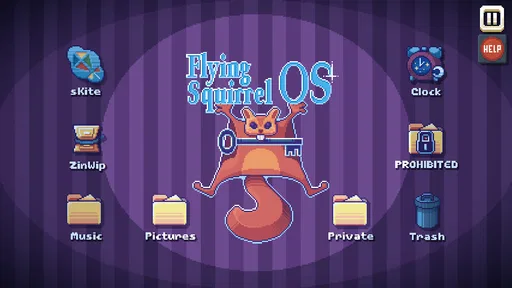
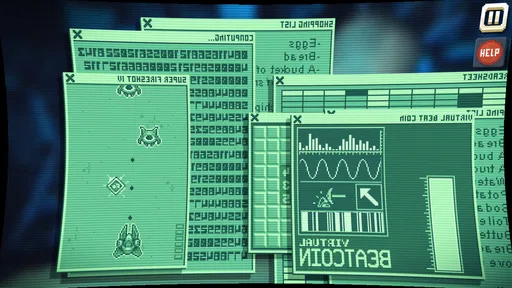
The graphics are charmingly simplistic, yet perfectly suited to the game's quirky vibe. It doesn’t rely on flashy visuals to impress; instead, it uses subtle animations and a unique art style to enhance the storytelling.
The sound design is another highlight. The narrator’s voice is accompanied by a delightful soundtrack that complements the game’s whimsical nature. Every sound cue feels intentionally placed to add to the overall experience, making it more immersive.
I’d recommend it to players who enjoy puzzle games with a strong comic voice, people who like testing assumptions, and anyone curious about interactive storytelling that doesn’t behave like a conventional adventure. It can also work well as a shared couch experience: one person can handle the interactions while another suggests interpretations, making the strange logic a conversation rather than a solitary block. That works best when both people enjoy the same playful uncertainty.
I’d steer away from it if I were looking for a relaxing match-and-clear loop, a competitive challenge, a traditional story with a reliable quest structure, or a game that spells out its next objective. It may also be a bad choice for a player who gets annoyed when a puzzle asks them to question the interface instead of simply solving what is in front of them. In those cases, a conventional puzzle collection or a more direct narrative adventure would be a better fit, even if it lacks this game’s particular sense of mischief.
Switching to another kind of puzzle game is easy if the indirect style isn’t working for you, but the trade-off is that those games usually make their rules more visible. Here, part of the satisfaction is discovering which assumptions can be trusted. I’d give it a fair chance by slowing down, listening closely and trying deliberate interactions; I wouldn’t force myself to continue if that process feels more irritating than amusing. Its unusual design is a clear identity, not a universal improvement over standard puzzles.
My recommendation after weighing the alternatives
So, is the game actually a game? Maybe not in the traditional sense, but that’s precisely what makes it so refreshing. It’s an inventive and humorous take on what interactive entertainment can be.
If you’re up for something different—something that’ll make you laugh, scratch your head, and perhaps rethink what a game can be—then give this "non-game" a try. It’s a delightful escape from the norm, and trust me, you’ll enjoy every unpredictable moment.
My recommendation is to buy it for its personality and its unusual puzzle perspective, not because you expect a conventional set of levels or a standard adventure. The developer, DRAW ME A PIXEL, has made an experience whose strongest appeal is the friction between what the narrator says and what I’m tempted to try. When that tension makes me curious, the game feels inventive and funny; when I want immediate clarity, it can feel needlessly evasive.
Ultimately, I’d pick it for a focused evening when I’m in the mood to pay attention, laugh at a dry voiceover and solve problems by questioning the rules. I’d choose a more straightforward puzzle game for quick, repeatable sessions, and a conventional story game when I want to follow a clearly guided plot. If the idea of being gently misdirected sounds entertaining rather than tiring, this is a distinctive purchase; if it sounds like a chore, the alternatives will serve you better.
Verdict
Strengths of There Is No Game: WD
- Engaging storyline with unexpected twists.
- Unique gameplay mechanics keep it fresh.
- Humorous dialogue adds to charm.
- Excellent voice acting enhances experience.
- Visually creative with clever art design.
Limitations of There Is No Game: WD
- Limited replay value after completion.
- Might be too short for some players.
- Puzzles can be overly challenging.
- Lacks traditional game structure.
- Requires a good internet connection.
Similar Picks in This Category
View All
Block Blast!
HungryStudio4.8

Braindom: Brain Games Test
Lahana Game Studio4.6

AMAZE!
CrazyLabs LTD4.6

Sudoku - Classic Sudoku Puzzle
Oakever Games4.7

Art Puzzle - Puzzle Games
Easybrain4.8

Amaze GO!
Oakever Games4.9
Frequently Asked Questions
What is the main concept of There Is No Game: WD?
There Is No Game: WD is an unconventional, narrative-driven puzzle game that challenges traditional gaming expectations. It presents itself humorously as a "non-game," where players are encouraged to explore and interact with various elements, breaking the fourth wall. The game blends humor, clever puzzles, and unexpected twists to keep players engaged.
Is There Is No Game: WD suitable for all ages?
There Is No Game: WD is generally suitable for teenagers and adults due to its complex puzzles and subtle humor. While it doesn't contain explicit content, its abstract concepts and meta-narrative may be challenging for younger audiences to fully appreciate. Parental guidance is recommended for younger players.
How long does it take to complete There Is No Game: WD?
The game typically takes around 3 to 5 hours to complete, depending on the player's puzzle-solving skills and exploration level. The non-linear narrative and multiple layers encourage players to take their time, experimenting with different interactions and enjoying the unique storytelling experience.
What platforms is There Is No Game: WD available on?
There Is No Game: WD is available on both Android and iOS platforms, ensuring a wide audience can enjoy its unique experience. The game is optimized for mobile devices, allowing players to experience its innovative design and humor on the go. It’s also available on PC for those who prefer gaming on larger screens.
Does There Is No Game: WD require an internet connection to play?
No, There Is No Game: WD does not require a constant internet connection to play, making it perfect for offline gaming sessions. Once downloaded, players can enjoy the full experience without needing to stay connected, making it convenient for travel or areas with limited connectivity.
Play our best games!


